Choosing Landscape Plants for Warmer Hardiness Zones
A warmer hardiness zone can make more landscape plants worth considering, but it is not a promise that every plant will thrive in every Ohio yard. The map helps narrow choices; it cannot account for a cold pocket, wet soil, winter wind, or summer shade. Use it as a starting point, then match plants to the conditions where they will actually grow.
What a Warmer Hardiness Zone Tells You
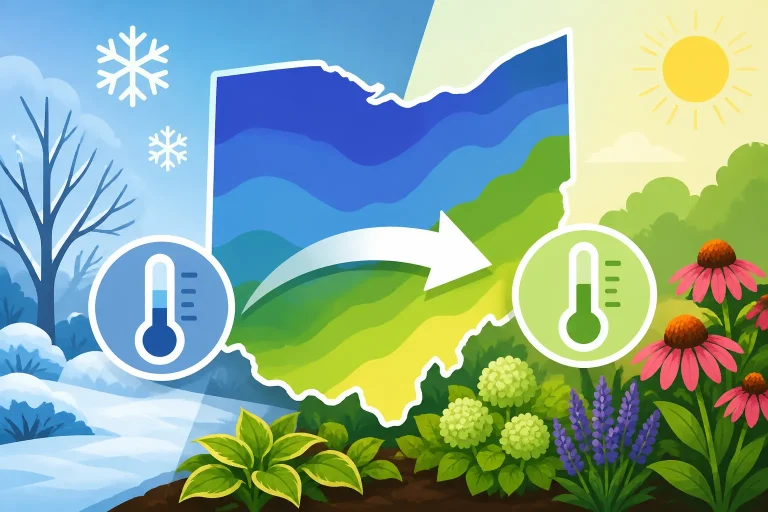
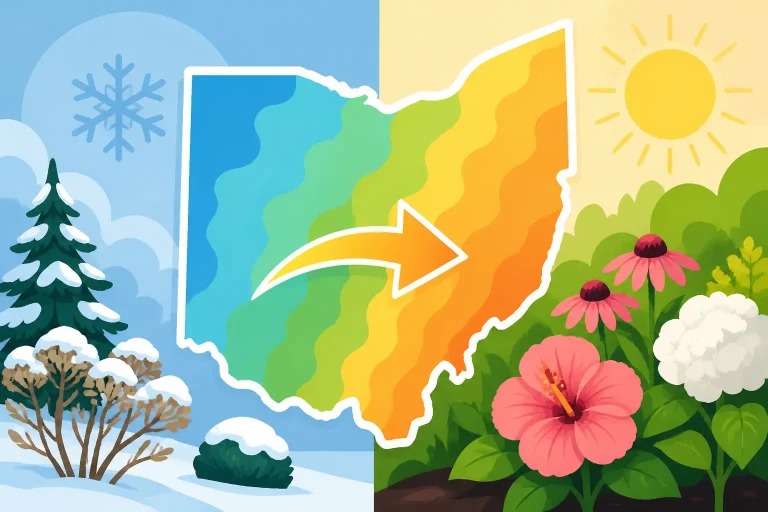
A plant hardiness zone is a way to compare winter cold patterns with the cold tolerance associated with plants. A warmer zone may make plants with less cold tolerance seem like more realistic options than they once did. That can broaden the choices for a landscape, especially when you are considering perennials, shrubs, or trees that remain outdoors through winter.
For Ohio gardeners, the important point is not simply whether a plant’s label appears compatible with a warmer zone. It is whether the plant can cope with the coldest conditions it is likely to meet in its particular spot. A yard’s position, exposure, soil drainage, and shelter all affect how a plant experiences winter. The map describes a broad regional pattern, not the temperature history of every garden bed.
The Ohio State University State Climate Office of Ohio says the updated map offers gardeners a revised guide to determining the most viable perennial plants for successful cultivation in the region. That makes the map useful when you are weighing options, but it does not turn a broad map category into a guarantee for an individual plant.
The Ohio State University also describes the maps as a general guideline for deciding which plants grow best in the region. In other words, a map can help you screen choices and ask better questions, but a plant’s site requirements still matter.
A hardiness zone is also not a planting calendar. It does not tell you when to sow vegetables, move seedlings outdoors, or expect the last spring frost. Those decisions depend on seasonal conditions and the crop being planted. For vegetable timing, use a resource such as Hardiness Zones vs Frost Dates: What Controls Ohio Planting Timing or When Can You Plant Vegetables in Ohio? Timing by Season. For perennial selection, the map’s role is narrower: it can help you judge whether a plant is likely to tolerate winter cold in the region.
It is useful to think of a warmer zone as an invitation to investigate, not a green light to buy. Before choosing a plant, check its cold tolerance, moisture needs, mature size, light preferences, and sensitivity to winter conditions. If those needs fit the site, the plant may be a reasonable candidate. If they do not, a warmer zone alone is unlikely to solve the mismatch.
Why a Warmer Zone Is Not a Guarantee
Hardiness is only one part of a plant’s ability to persist. Plants also respond to how quickly the weather changes, whether their roots stay wet, how much wind reaches the site, and whether they can establish before difficult conditions arrive. Two beds in the same yard can offer different growing conditions, and a plant that succeeds in one may struggle in the other.
A cold spell can still matter
A warmer zone does not mean that cold weather disappears. A plant that tolerates a typical winter pattern may still be stressed by an unusually cold spell, especially if it is newly planted, exposed, or already weakened. Some plants also respond poorly to rapid temperature swings. A stretch of mild weather can encourage growth, followed by a cold return that injures tender new growth.
That is one reason to be cautious about treating a map change as proof that a borderline plant will now be dependable. If a plant is near the edge of its cold tolerance, its survival may depend on the details of the site and the weather in a particular winter. A garden plan should leave room for that uncertainty.
Winter wetness can be as important as cold
Cold tolerance does not necessarily mean tolerance of waterlogged soil. When a site stays saturated, roots may be deprived of air and more vulnerable to damage. A plant that is otherwise suited to the region can fail in a low, poorly drained bed. Conversely, a plant in a raised or well-drained position may fare better than the map alone suggests.
Check where water settles after rain or snowmelt. Notice whether the bed dries slowly, stays damp, or becomes dry quickly. Those observations can be more useful than choosing a plant based only on its listed zone. When drainage is the limiting factor, consider changing the planting location or choosing a plant suited to the moisture pattern rather than trying to make a poor match work.
Wind and exposure change the experience of winter
An open bed beside a driveway or lawn may experience more wind than a sheltered location near a building or established planting. Wind can dry evergreen foliage and expose stems to harsh conditions. A wall may offer some shelter, but it can also create a warmer, drier pocket where plants leaf out early or receive reflected heat.
Shelter is not automatically beneficial. A protected location can help reduce exposure, but warmth that encourages early growth may leave new shoots vulnerable if cold returns. A thoughtful site assessment considers both protection and the possibility of premature growth.
Summer conditions still count
A plant’s ability to survive winter does not establish that it will be comfortable through summer. Sun exposure, heat reflected from hard surfaces, dry soil, humidity, and competition from tree roots all influence growth. A plant selected because it may tolerate a warmer winter pattern can still fail if it needs steady moisture in a hot, exposed bed.
For the same reason, do not treat a zone designation as a measure of drought tolerance, disease resistance, or maintenance needs. Those are separate characteristics. Choose plants that fit the whole growing environment, not just the coldest part of the year.
For a broader look at how map revisions relate to plant choices, Understanding Recent USDA Hardiness Zone Revisions and Evaluating Ohio Perennial Choices Under Evolving Zone Bounds can help frame the decision. For the effects of sudden cold after a mild spell, see Why Sudden Ohio Cold Snaps Can Damage Warmer-Zone Perennials.
How to Evaluate a Plant Before You Choose It
The most useful plant-shopping question is not simply, “Does this plant fit a warmer zone?” It is, “What evidence suggests this plant will do well in this specific part of my yard?” A short review of the plant and site can prevent an appealing label from driving a poor choice.
Read the full plant description
A label may give a hardiness range, but that is only one piece of information. Look for the plant’s preferences for sun, soil moisture, drainage, and soil type. Check whether it prefers sheltered conditions, tolerates wind, or needs protection from winter wetness. These details help distinguish a genuinely suitable plant from one that merely appears possible on a map.
Pay attention to whether the plant is described as reliable, marginal, or best in a protected location. Such language signals that success may depend on microclimate and care. If the description is vague, ask a knowledgeable nursery professional or consult a reliable regional plant reference before buying.
Also check the plant’s mature form. A shrub that will eventually outgrow its space can become a recurring pruning problem, while a tree planted too close to a structure may create future conflicts. Consider the expected width and height, the root space available, and whether the plant will block a path, window, or neighboring planting as it grows.
Check more than the zone label
Compare information from more than one dependable source when a plant is near the edge of its stated cold tolerance. The descriptions may not use identical wording, and a plant’s performance can vary across sites. The goal is not to find a label that tells you what you want to hear; it is to understand the range of conditions under which the plant has a reasonable chance of succeeding.
When you research a plant, look for answers to practical questions:
- Does it need full sun, partial shade, or protection from afternoon heat?
- Does it prefer soil that stays moist, or does it require excellent drainage?
- Is it evergreen, and could winter wind dry its foliage?
- Does it flower on old or new growth, making pruning choices important?
- Is it prone to spreading or likely to need regular maintenance?
- Does it have room to reach its mature size without crowding other plants?
These questions apply whether you are choosing a perennial, shrub, or small tree. For broader advice on matching landscape plants to conditions, see Matching Perennials to Your Soil, Sun, and Ohio Hardiness Zone and Choosing Ohio Shrubs for Challenging Yard Conditions.
Treat local performance as useful evidence
A plant growing successfully in a nearby landscape can be a helpful clue, especially if the site resembles yours in exposure and soil. It is not proof that the plant will perform the same way in your yard. The neighboring garden might have better drainage, more shelter, different soil, or years of established roots.
Look for patterns rather than a single showcase planting. If you see the same type of plant doing well in several local settings, that is more informative than one exceptional specimen. If it appears only in protected gardens or is frequently damaged, consider whether the added care is worth it.
Ask local garden centers what they see succeeding in the area, but use that advice alongside your own observations. A plant sold locally may still be intended for a sheltered site or for gardeners willing to provide extra attention. Make sure the advice accounts for your bed’s light, moisture, and exposure.
Consider what happens if the plant struggles
Some gardeners are happy to experiment with a plant that might be marginal, especially when it can be replaced easily. Others want a landscape that needs little intervention. Decide which approach suits your budget, time, and tolerance for uncertainty.
A trial planting is less risky when the plant is inexpensive, easy to remove, and placed where failure will not leave a large gap. A long-lived tree or a major foundation shrub deserves more careful assessment because replacement can be disruptive. If a plant is a gamble, give it a location where a future substitution will be manageable.
Match the Plant to the Actual Site
A landscape plant can be a good regional choice and still be a poor choice for a particular bed. Before selecting plants, examine the site at different times of day and through changing weather. Pay attention to what the space does, not just what it looks like during a pleasant visit.
Light changes across the yard
Observe whether a bed receives direct sunlight for much of the day, brief morning sun, or shade from trees and buildings. The amount and intensity of light can change as trees leaf out and as the sun’s angle shifts through the seasons. A spot that seems sunny before nearby trees leaf out may become much shadier later.
Do not assume a warmer-zone plant will tolerate more heat simply because the map makes it seem more feasible. Some plants that are suited to warmer climates need shade in a hot exposure, while others need substantial sun to flower well. Match the plant’s light preference to the conditions where it will spend most of the growing season.
For beds with limited sun, Native Shade Plants for Dappled and Dry Ohio Woodland Spots and Perennials and Groundcovers That Thrive in Dry Ohio Shade can help narrow options. For a sunny border, Ohio Wildflowers and Native Grasses for Sunny, Dry Garden Beds offers a different kind of starting point.
Soil moisture and drainage shape performance
Notice how soil behaves after rainfall. Does water run off quickly, soak in gradually, or collect in a depression? Does the bed dry out during warm weather, or does it remain moist? These observations help identify whether a plant should tolerate wet conditions, withstand occasional dryness, or receive consistent moisture.
Texture matters, too. Heavy soil can drain slowly and become difficult to work when wet, while sandy soil may dry quickly. A plant’s preferred soil conditions should guide placement and preparation. Adding amendments without understanding the underlying problem may not create a durable fix. For help thinking through soil and drainage, see Improving Ohio Soil Structure with Organic Matter and Compost and Fixing Drainage Issues When Garden Vegetables Wilt. The latter focuses on vegetable beds, but the general observation of water movement can also help when assessing a landscape site.
Do not plant a moisture-loving species in a dry location and expect frequent watering to erase the mismatch forever. Likewise, a plant that needs well-drained soil is a risky choice in a low spot that stays wet. Choosing a plant suited to the site is usually more sustainable than trying to make the site behave like a different one.
Microclimates can work for or against you
A microclimate is a small area with conditions that differ from the surrounding yard. A building can shelter a bed from wind or reflect heat onto it. A slope may drain cold air differently from a low hollow. Large trees may shade the ground while also competing for moisture.
These local effects can make a borderline plant more plausible in one part of a property and less plausible in another. They can also create new stresses. A warm wall might protect a plant from some exposure but encourage early growth. A sheltered corner might reduce wind but retain moisture. Consider the benefits and drawbacks together.
If you are planning a larger landscape, group plants with similar light and moisture needs rather than scattering them according to appearance alone. This makes it easier to water appropriately and reduces the chance that one plant’s needs will conflict with those around it.
Think about the plant’s surroundings as it matures
A newly planted bed can look open, but shrubs and perennials change size over time. Nearby trees cast more shade as they grow, and roots can occupy soil that once seemed available. A plant that suits today’s light and space may face very different conditions later.
Consider both current and future conditions. Avoid placing a plant where it will be crowded by mature neighbors or where maintaining its shape would require constant pruning. When a site is already crowded, a smaller-growing plant or a different bed may be a better choice than relying on repeated trimming.
Choosing Among Perennials, Shrubs, Trees, and Bulbs
Warmer hardiness zones can prompt interest in plants that were previously treated as less dependable. The right way to approach that possibility depends partly on the kind of plant. A perennial, a shrub, and a tree do not carry the same cost of failure or require the same level of commitment.
| Plant type | What to assess beyond hardiness | Common trade-off |
|---|---|---|
| Perennials | Soil moisture, winter drainage, flowering needs, and whether foliage persists | Easier to replace than a tree, but a poor site match can mean recurring losses |
| Shrubs | Mature size, winter exposure, pruning needs, and the condition of old growth | Can provide structure, but may be costly or difficult to replace once established |
| Trees | Rooting space, mature canopy, exposure, and long-term placement | Offer lasting structure, but require the most careful site planning |
| Bulbs | Planting conditions, drainage, bloom timing, and whether foliage can remain after flowering | Can add seasonal color, but may not suit a bed that is frequently disturbed |
| Annuals | Sun, moisture, heat, and the effort of replanting | Flexible for experimentation, but need recurring attention |
Perennials
Perennials are often the easiest category in which to test a new idea. If a plant does not perform well, it may be simpler to replace than a large woody plant. Still, a perennial that is marginal for the site can become a repeated source of disappointment, especially if it is exposed to winter wetness or severe wind.
Look at the full cycle, not just the flower display. Some perennials offer attractive foliage or seed heads after blooming; others become untidy or need support. Consider whether you will want to cut them back, leave their stems for winter interest, or divide crowded clumps. The best choice is one that suits both the conditions and the upkeep you want.
For plants with winter interest, Ohio Perennials With Persistent Seed Heads and Winter Form may help you consider the landscape beyond peak bloom. If you are building a longer-lasting flower bed, Perennial Garden Design for Continuous Ohio Blooms can help with the broader arrangement.
Shrubs
Shrubs provide structure, screening, flowers, foliage, or fruit. Their mature size and location deserve careful thought because an unsuitable shrub can be difficult to manage once it has filled its space. Confirm whether it needs pruning and when that pruning is appropriate; a mismatch between pruning habits and flowering habit can reduce the display.
For a plant that may be marginal in winter, assess whether the site offers meaningful protection without creating other problems. A shrub near a wall may receive shelter and reflected heat, while an exposed corner may be much harsher. Also consider whether winter damage would be easy to prune out or would leave the plant misshapen.
If you want landscape plants that support wildlife, consider the overall value of the shrub: flowers, fruit, shelter, and seasonal structure. Tidy Ohio Native Shrubs That Feed Birds and Fit Suburbia and Native Shrubs and Small Trees for Sturdy Ohio Hedgerows can help compare landscape roles without reducing the decision to hardiness alone.
Trees
Trees are a long-term choice. Before planting, consider the mature canopy, root space, overhead clearance, nearby structures, and the shade that will develop over time. A tree selected for a warmer zone may still be the wrong fit if it cannot grow to its natural form in the available space.
Do not select a tree solely because it might survive a winter. Look at its expected size, growth habit, soil needs, and tolerance of the site’s moisture and exposure. A marginal tree in a prominent location could leave a large gap or create costly replacement work if it declines.
For more on planning a tree choice, see What to Know Before Planting Deciduous Shade Trees in Ohio and Ohio Trees for Tight Spaces Near Pavement or Buried Pipes. Those considerations remain important even when a plant appears compatible with a warmer zone.
Bulbs and annuals
Bulbs and annuals can be useful for testing color and seasonal effects without making the same long-term commitment as a tree or shrub. They still need suitable light and soil. Bulbs are particularly sensitive to poorly drained planting locations, while annuals may require recurring care through the growing season.
A warmer zone should not be the sole reason to choose a bulb or annual. Consider when it blooms, what the surrounding plants look like at that time, and whether you are willing to maintain the space after the display fades. For bulb timing and placement, see When to Plant Spring and Summer Bulbs in Ohio Gardens.
Planting and Establishing a New Landscape Choice
A suitable plant can still struggle if it is planted under poor conditions or has not had time to establish. Good planting practice cannot overcome a fundamental mismatch, but it can reduce avoidable stress and help you judge whether the choice is working.
Choose the planting time for the plant and the site
Do not use a warmer hardiness zone as a signal to rush planting. A zone map does not specify when the soil is workable or when weather is appropriate for planting. Consider the plant’s needs, the condition of the soil, and the seasonal weather pattern. Avoid working wet soil in ways that compact or damage its structure.
For ornamental plants, check current regional guidance or the nursery’s recommendations for the plant type. The right planting season can differ by whether the plant is a perennial, shrub, tree, or bulb. If you are uncertain, ask a local nursery or consult a regional planting resource rather than guessing from the map.
Prepare the planting area without overcorrecting it
Clear competing vegetation and assess the bed before planting. If the site has a drainage or soil issue, identify it first. Avoid making broad changes based on assumptions about what the soil needs. A plant that prefers conditions unlike the existing bed may be better placed elsewhere than supported by repeated amendments.
Give plants enough space for their mature form. Crowding can limit airflow, shade out smaller plants, and make maintenance harder. Spacing decisions should account for the full expected size rather than the dimensions of the plant in its nursery pot.
Help roots establish
New plants need time to adapt to their new surroundings. Keep an eye on soil moisture, especially when weather turns dry or unusually warm, but do not assume that frequent watering is always beneficial. Overwatering can be as harmful as letting roots dry out, particularly in poorly drained soil.
Use mulch thoughtfully to help moderate soil conditions and reduce competition from weeds, while keeping it from piling against stems or trunks. The needs of newly planted perennials and woody plants can differ, so follow plant-specific care guidance. If you are planting several types together, group plants with similar moisture needs to simplify care.
Watch for patterns, not a single bad day
A plant may droop temporarily in hot weather, show minor transplant stress, or lose a few leaves while adjusting. Look for persistent patterns rather than reacting to every short-term change. Repeated wilting, declining foliage, poor flowering, or winter dieback may point to a mismatch in moisture, light, drainage, or exposure.
If a plant struggles, consider the site conditions before adding products or increasing care. More water will not fix a plant growing in saturated soil, and extra fertilizer will not correct an unsuitable light level. Identify the likely cause before making changes. For general diagnostic thinking, Why Diagnosing Plant Trouble First Protects Ohio Gardens is a useful companion.
Keep records of what works
Make a simple note of where you planted each new plant and what the site is like. Record whether it receives strong sun, stays damp, or is exposed to wind, and note how it performs through the seasons. This turns trial and error into useful information for future decisions.
If a plant thrives in one part of the yard but not another, compare those locations. The difference may reveal that drainage, shelter, or shade matters more than the zone label. Over time, your own observations can help refine the plant palette for the property.
A Practical Way to Make the Decision
When a plant appeals to you because it may suit a warmer hardiness zone, use a consistent selection process. It keeps the map in perspective and makes it easier to compare candidates.
- Start with the site. Identify the bed’s sun exposure, drainage, soil moisture, wind exposure, and available space.
- Check the plant’s full needs. Review cold tolerance along with light, moisture, soil, mature size, and maintenance.
- Look for local evidence. Ask whether the plant performs well in comparable settings, not just whether it is available for sale.
- Consider the consequences of failure. Treat an experimental perennial differently from a large, long-lived tree.
- Choose a suitable location. Use shelter where it helps, but consider reflected heat, early growth, and winter moisture.
- Plan for establishment. Give the plant conditions that support root growth and monitor moisture without overcorrecting.
- Reassess after the seasons change. Judge performance over time, not from a single warm spell or cold night.
This process is especially useful when a plant appears to sit close to the edge of its tolerance. If the plant fits the soil and exposure, and local evidence supports the choice, trying it may be reasonable. If its needs conflict with the site, choose a better match even if the map seems favorable.
A landscape also benefits from balance. Use dependable plants for the main structure and reserve a smaller space for less certain choices. That way, an experiment can add interest without making the entire planting depend on a plant that may not suit the site. The strategy works for new beds as well as gradual changes to established landscapes.
Keep the purpose of the planting in view. A privacy screen, pollinator bed, shade garden, foundation planting, and low-maintenance border all ask different things of plants. A plant may be attractive but fail to perform the role you need. Select for the intended function as well as for winter survival.
Finally, treat the map as one tool in a broader decision. A warmer hardiness zone can expand the list of plants worth investigating, but successful landscape choices still depend on cold tolerance, local conditions, appropriate planting, and realistic expectations. If the plant’s requirements align with the site and you are comfortable with the risk, it may be worth trying. If not, there are many ways to create a strong landscape with plants better suited to the conditions you already have.
Frequently Asked Questions
Does a warmer hardiness zone mean a plant will survive every Ohio winter?
No. A zone is a broad guide to winter cold tolerance, not a guarantee for a particular plant or location. Unusual cold, wind, wet soil, and the plant’s health can all affect winter performance.
Should I choose plants only by their hardiness label?
No. Use the label to screen possibilities, then compare the plant’s light, moisture, drainage, mature size, and maintenance needs with the site. Local performance in similar conditions can also be useful evidence.
Can I use hardiness zones to decide when to plant?
Not by themselves. The map helps with plant suitability, while planting timing depends on the plant and current seasonal conditions. Use a planting calendar or regional advice for timing.
Is it worth trying a plant that may be marginal?
It can be, if you are comfortable with uncertainty and choose a location where replacement would be manageable. Be more cautious with expensive, long-lived, or prominent plants that would be difficult to remove or replace.
Sources
- The Ohio State University State Climate Office of Ohio — Plant Hardiness Map Reflects Climate Change Impacts on Ohio | State Climate Office of Ohio (checked November 14, 2026)
- The Ohio State University — 2023 USDA Plant Hardiness Zones | OSU Extension – Lorain County Agriculture and Natural Resources (checked November 14, 2026)
Disclaimer
This article is for general informational purposes only and does not constitute professional advice. Laws, prices and regulations vary by location and change over time. Consult a qualified professional for guidance on your specific situation. Ohio Gardening Guide is not a government agency and is not affiliated with any university extension, state department of agriculture or other government agency.