Hardiness Zones vs Frost Dates: What Controls Ohio Planting Timing
Ohio gardeners often face two different questions: will a plant survive winter here, and is it safe to put it outside now? Hardiness zones help with the first; frost dates help with the second. Neither gives a complete planting schedule by itself. Understanding what each measure can—and cannot—tell you makes it easier to choose plants and time garden work around local conditions.
What an Ohio hardiness zone tells you
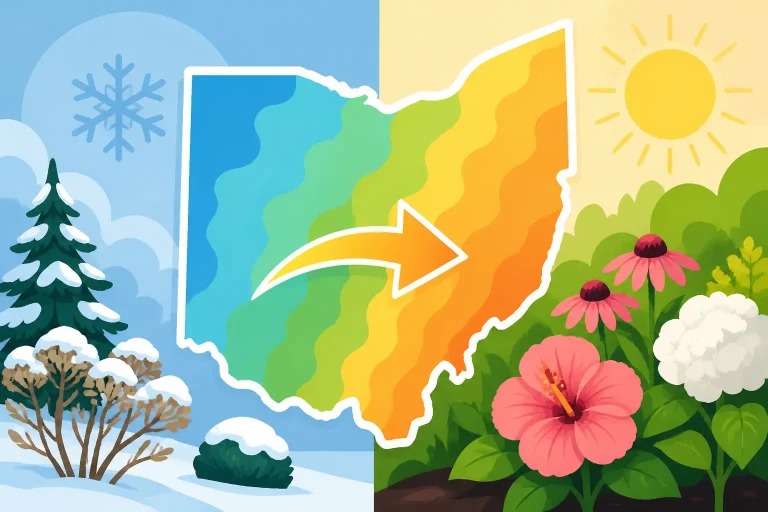
A hardiness zone is a broad way to compare how cold a region’s winters tend to get. Gardeners use it mainly to judge whether a perennial plant, shrub, or tree is likely to tolerate the coldest part of winter in a location. It is a long-term climate reference, not a forecast for a particular season.
The Ohio State University describes hardiness maps as a general guideline for deciding which plants grow best in the region. That distinction matters. A map can help narrow down plant choices, but it cannot promise that a plant will thrive in every yard that falls within the same mapped zone.
Ohio is not one uniform garden site. Conditions can differ across the state and within a neighborhood. A yard may be exposed to winter wind, sit in a low spot where cold air gathers, or have a protected area near a building. Soil drainage, snow cover, and how long cold conditions persist can also affect how a plant fares. The map offers a useful starting point, but the actual planting site still matters.
A zone is most useful when you are considering plants that need to survive outdoors for several years. If a perennial or woody plant is not reliably hardy for the conditions at your site, it may suffer winter damage or fail to return. A plant label’s zone range can help you assess that risk, but it should not be treated as a guarantee or a measure of how quickly a plant will grow.
A zone is much less useful for deciding when to sow vegetable seeds, set out tomato transplants, or plant tender annuals. Those choices depend on immediate conditions in spring and fall, including the chance of frost and whether the soil and air are warm enough for the crop. A plant can be suited to an Ohio winter and still be vulnerable if planted outdoors during a cold spring spell.
For a closer look at what the map represents across the state, see Ohio Plant Zones: How USDA Hardiness Regions Divide the State. If you are choosing plants for a landscape in a warmer mapped area, Choosing Landscape Plants for Warmer Hardiness Zones can help put hardiness into a broader plant-selection context.
What frost dates tell you—and what they do not
Frost dates are planning estimates for when frost may occur in a location. Gardeners often use a last spring frost estimate to think about when tender plants might go outdoors, and a first fall frost estimate to consider how much growing time remains. These estimates are not fixed calendar appointments. Frost can arrive earlier or later than an average or probability-based estimate in any particular year.
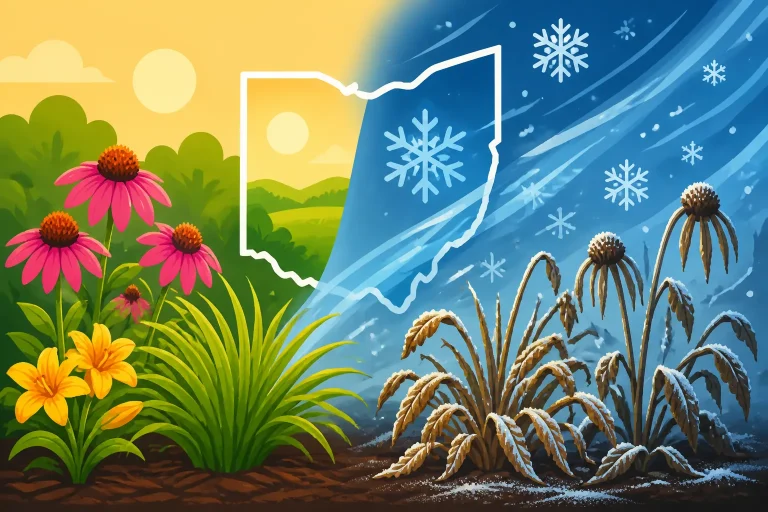
That makes frost dates a different tool from hardiness zones. A zone helps frame winter survival over time; a frost-date estimate helps frame seasonal risk. One is not a substitute for the other. A perennial may be winter-hardy but still need protection from a late spring frost when new growth is exposed. A warm-season vegetable may be planted after the spring frost risk has eased, yet still need warm soil and settled weather to grow well.
A reported frost date also does not mean the chance of frost disappears the next day. The risk declines or changes according to the probability associated with the estimate, but a late cold night can still happen. For that reason, use a frost date as a reference point for planning rather than an automatic signal to plant.
Location affects how useful a general frost estimate is. A garden in a low-lying area may experience colder conditions than a nearby site on higher ground. A sheltered urban yard may behave differently from an open, windy plot. Lakeside influence, slope, surrounding pavement, and nearby structures can all shape conditions at the garden itself. Local estimates can help, but observing the site and checking the near-term forecast remain important.
Frost dates also do not tell you whether a crop is ready for outdoor conditions. A seedling raised indoors may need gradual adjustment to outdoor light, wind, and temperature before it is planted out. A crop can be frost-tolerant but still be set back by conditions that are too cold or wet. And a frost-sensitive crop may be damaged by a cold night even after a period of warm afternoons.
For a deeper explanation of how risk estimates work, see Spring Frost Probabilities and Garden Planting Across Ohio. To compare how planting windows shift across the state, Comparing Spring Planting Windows Across Ohio Regions provides a useful next step.
Why zones and frost dates can point in different directions
It is common to see a plant that appears suitable for an Ohio hardiness zone but wonder whether it is too early to plant it. That is not a contradiction. The two measures answer different questions.
Imagine a perennial labeled for a zone that includes your area. Its hardiness rating is about whether it can withstand winter conditions once established. It does not tell you whether a newly planted specimen will handle a sudden cold snap, how quickly the soil will warm, or whether the planting spot drains well. A suitable zone rating is one part of the decision, not the whole decision.
The reverse can happen with vegetables. A crop may be planted after the typical spring frost risk has diminished, but that does not ensure ideal growing conditions. Cold soil can slow germination or root growth, while persistently cool air can stall a warm-season crop. Planting based only on the last frost estimate may expose a crop to stress even if there is no actual frost.
The Ohio State University says plant decisions should also take light, soil moisture, temperature, duration of exposure to cold temperatures, and relative humidity into consideration. In practical terms, that means a map or a frost estimate should be checked against the plant’s needs and the specific conditions in the bed.
These considerations are related, but they are not interchangeable:
- Light affects whether a plant has the growing conditions it needs in that spot. A plant that tolerates the local winter may still struggle in too much shade or intense sun.
- Soil moisture affects roots and can shape how plants respond to cold or heat. A poorly drained site presents a different challenge from a well-drained bed.
- Temperature includes more than the possibility of a frost. Soil and air conditions can both affect whether a plant establishes or grows.
- Duration of cold exposure matters because a brief cold dip and a long stretch of cold conditions are not the same challenge for a plant.
- Relative humidity is another part of the environment that can affect plant performance, particularly when considered alongside temperature and moisture.
This is why the same plant can perform differently in two Ohio gardens, even when both gardens fall within the same hardiness zone and use the same general frost-date information. A sheltered bed with suitable soil may offer a better site than an exposed, wet one. Conversely, a warm-looking location may still have a cold pocket where frost settles.
For gardeners deciding when to plant vegetables, Do USDA Hardiness Zones Tell You When to Plant Garden Vegetables? explains why zone information alone cannot set a vegetable schedule. You can also use When Can You Plant Vegetables in Ohio? Timing by Season to connect seasonal crop timing with the conditions in your own garden.
How to use both tools when planning a garden
The most reliable approach is to use the zone as a plant-selection filter and frost estimates as one piece of seasonal planning. Then check the plant’s specific needs and the conditions on site. This keeps a broad map from being asked to answer a question it was not designed to answer.
Start with the plant’s role
First, decide whether you are choosing a plant that must survive outdoors through winter or timing a crop that will grow for only part of the season.
For trees, shrubs, and perennial plants, check whether the plant’s hardiness range is a reasonable match for the area. Then consider the planting spot: its exposure, drainage, soil moisture, and the amount of shelter it receives. A plant rated as suitable for a region can still be a poor fit for a particular site.
For vegetables and annual flowers, the main question is often whether the plant can handle the current conditions. Frost sensitivity matters, but so do soil temperature, air temperature, wind, and the plant’s stage of growth. A young transplant may need different treatment from an established plant, and an indoor-grown seedling may need time to adjust before it is exposed to outdoor weather.
Use frost estimates as a risk signal
Check the relevant spring or fall frost estimate for the garden’s area, but do not treat it as a promise. Consider what the estimate represents and how much risk you are willing to accept. If a tender crop would be difficult to replace, waiting for more favorable conditions may be worthwhile. If you are planting a hardy crop, the decision may be less dependent on the same frost threshold.
A short-range forecast is useful as planting time approaches because it reflects the weather expected in the immediate future. Even then, a forecast cannot remove all uncertainty. Keep a plan for protecting or delaying vulnerable plants if a cold night is expected, and avoid assuming that a warm stretch guarantees that cold weather is over.
Check the soil and the planting site
Before planting, assess whether the soil is workable and whether it fits the crop’s needs. Very wet soil can be difficult to work without damaging its structure, while cold soil may not support quick establishment for a crop that prefers warmth. Those are different issues from whether a frost is expected.
Check the actual bed rather than relying solely on a nearby weather reading or a broad regional map. A low point, exposed edge, or sheltered corner can create a noticeably different microclimate. Keep notes about where frost tends to linger and where plants seem to establish well. Over time, these observations help translate broad guidance into decisions for your own garden.
Adjust the plan to the crop
Group plants by their tolerance for cold and warmth, then schedule the more sensitive ones with greater caution. A single planting date for an entire garden is rarely the best fit when crops have different needs. Some can be sown or planted in cooler conditions; others do better after the soil and weather have warmed.
A seasonal calendar can organize these decisions, but it should remain flexible. Annual Ohio Planting Calendar: Month-by-Month Outdoor Chores offers a broad planning framework, while Ohio Cool-Season Sowing Windows: Early Spring Through Fall focuses on crops that can be considered in cooler parts of the growing season.
Keep a record of what happens
Note when you planted, what conditions were like, and how the plants responded. Record late cold spells, slow germination, transplant stress, or winter injury. These notes do not replace climate maps or local estimates, but they help reveal patterns specific to the property.
If one garden bed consistently stays wet or cold longer than another, future plans can account for that. If a particular plant survives winter but struggles after spring planting, the issue may be establishment conditions rather than hardiness. A few seasons of observations can make planting decisions more precise without turning a general estimate into a false guarantee.
Common planning mistakes and better alternatives
Treating a zone as a planting calendar
A zone does not tell you when to sow or transplant. It describes broad winter conditions relevant to plant survival. Use it to help choose plants, then use frost risk, soil condition, and the crop’s temperature needs to plan seasonal work.
Treating a frost date as a safe-to-plant deadline
A frost estimate is not a line after which risk disappears. It is a probability-based planning reference, and actual conditions vary. Watch the forecast and consider the vulnerability of the plant rather than planting automatically on a date derived from an estimate.
Assuming every part of Ohio has the same timing
Statewide advice can be useful as a starting point, but local conditions differ. Regional position, elevation, exposure, and yard layout can affect frost risk and soil warming. A gardener should use regional guidance alongside observations from the actual planting site. Hardiness Zones vs Frost Dates: What Controls Ohio Planting Timing is this article’s topic, so for a broader regional comparison, see Northeast to Southern Ohio: Reading the Regional Plant Zones Map or Regional Freeze Date Shifts from South to North Ohio.
Planting by the calendar without checking the plant
Different plants tolerate different conditions. A hardy crop and a tender transplant should not be treated as if they have the same threshold. Check the seed packet, plant label, or reliable growing advice for the crop, then compare its needs with current soil and weather conditions.
Ignoring how the plant will be established
The weather that a mature plant can tolerate may not be suitable for a newly planted one. A transplant moved directly from a protected indoor space into wind and bright outdoor conditions may experience stress, even if frost is not in the forecast. Gradually exposing seedlings to outdoor conditions can make the transition less abrupt. For details, see Hardening Off Indoor Seedlings Before Planting Out in Ohio Beds.
Assuming a warm afternoon means the bed is ready
Air can warm quickly while the soil remains cool or wet. A single warm day is not a dependable signal that conditions suit a warmth-loving crop. Check the soil and consider the broader weather pattern, especially before planting crops that prefer warmth.
Using a map to choose every landscape feature
Hardiness is only one selection factor. Light, moisture, soil, exposure, and the amount of care a plant needs also affect whether it is a sensible choice. A plant that survives the winter may not thrive where it is placed. For a more complete decision process, Matching Perennials to Your Soil, Sun, and Ohio Hardiness Zone connects plant selection with site conditions.
Frequently Asked Questions
Does an Ohio hardiness zone tell me when to plant vegetables?
No. A zone helps assess whether plants are suited to winter conditions, while vegetable planting decisions also depend on frost risk, soil warmth, crop tolerance, and the weather at the time of planting.
Are frost dates fixed for every year?
No. Frost-date estimates describe probabilities, not guaranteed dates. Conditions vary from year to year, so use an estimate as a planning reference and check the forecast as planting approaches.
Which should I check first, the zone or the frost date?
It depends on the decision. Start with the zone when choosing a plant that must survive winter. Start with seasonal frost risk and current conditions when deciding whether to plant a tender crop or transplant.
Can a plant suited to my zone still be damaged by cold?
Yes. A suitable hardiness rating does not remove the risk of damage from unusual cold, prolonged exposure, or a vulnerable growth stage. The planting site and the duration and conditions of cold exposure also matter.
Why do two nearby gardens have different planting outcomes?
Differences in slope, shelter, soil moisture, drainage, and exposure can create distinct conditions. A regional map or frost estimate cannot capture every detail of an individual yard, so local observation is useful.
Sources
- The Ohio State University — 2023 USDA Plant Hardiness Zones | OSU Extension – Lorain County Agriculture and Natural Resources (checked November 14, 2026)
Disclaimer
This article is for general informational purposes only and does not constitute professional advice. Laws, prices and regulations vary by location and change over time. Consult a qualified professional for guidance on your specific situation. Ohio Gardening Guide is not a government agency and is not affiliated with any university extension, state department of agriculture or other government agency.