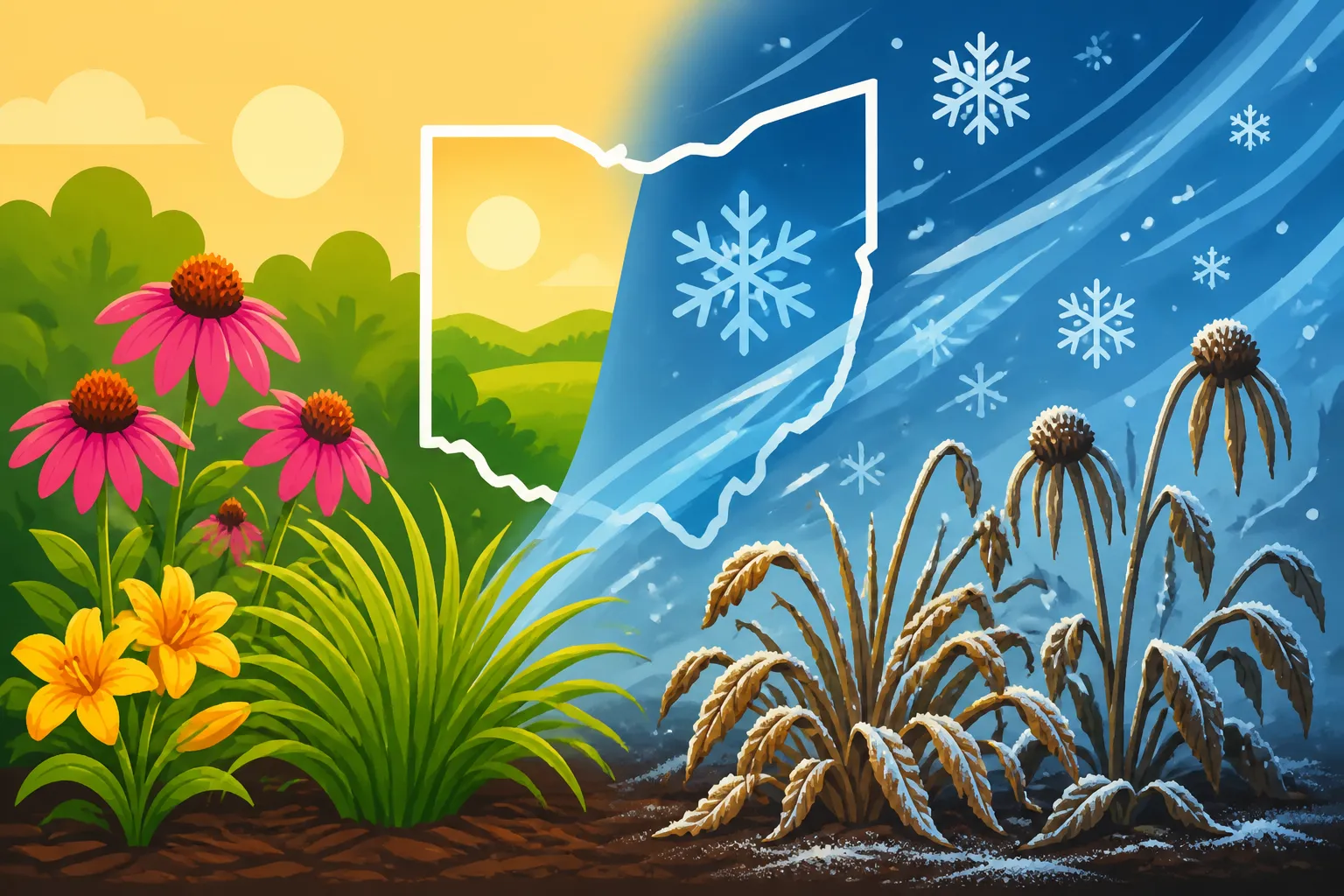
Why Sudden Ohio Cold Snaps Can Damage Warmer-Zone Perennials
A perennial that suits a warmer hardiness zone may still struggle when Ohio temperatures drop abruptly after a mild spell. The zone label is useful, but it cannot predict every cold snap or account for a plant’s condition and garden site. Understanding why plants lose cold tolerance—and what you can do before and after a freeze—helps you make safer choices and avoid preventable damage.
Why a hardiness zone cannot promise winter protection
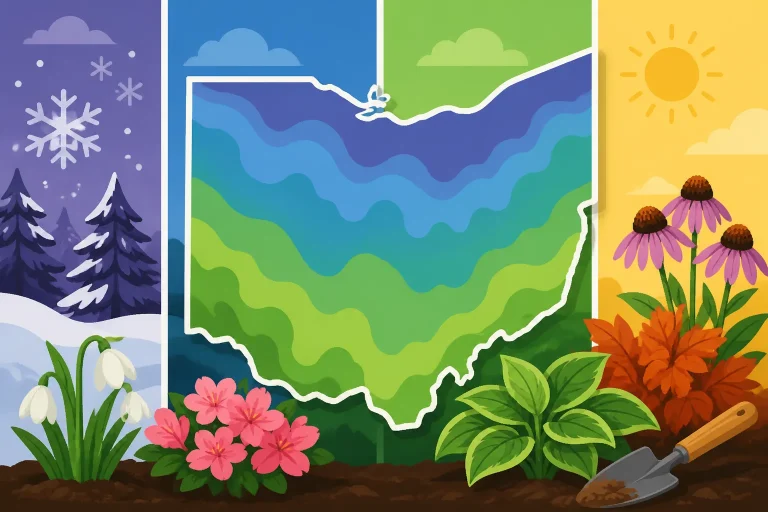
The USDA Plant Hardiness Zone Map helps gardeners compare locations by their typical winter conditions. It is a useful starting point when choosing perennials, but it does not describe every weather event a plant will face. A zone is not a guarantee that temperatures will stay within a plant’s comfort range throughout winter, nor does it show whether a plant is fully prepared for a sudden temperature drop.
According to The Ohio State University State Climate Office of Ohio, parts of Ohio are transitioning from Zone Five to Zones Six or Seven. A warmer zone can make some plants more plausible choices for a garden, but it does not remove the risk of abrupt cold. A plant suited to a warmer zone may be vulnerable if it has not had time to adjust to winter conditions, is growing in an exposed location, or faces a cold spell after a warm stretch.
The map also describes broad regional patterns, not the exact conditions of every yard. A sheltered garden near a building can experience different exposure from an open, windy site. Low areas may collect cold air, while slopes and urban settings can have their own local patterns. These small-scale differences matter, especially for plants near the edge of their expected hardiness.
That is why zone information works best alongside observation of the garden itself. Consider the plant’s exposure, drainage, vigor, and recent weather, rather than treating a zone label as a promise. For a closer look at how the map relates to planting decisions, see Do USDA Hardiness Zones Tell You When to Plant Garden Vegetables? and Understanding Recent USDA Hardiness Zone Revisions. Although those articles address different planning questions, the same general point applies: a zone is one useful clue, not a complete forecast for an individual plant.
What a sudden cold snap does to a perennial
Perennials prepare for winter through gradual seasonal changes. As growing conditions shift, many plants slow active growth and become more cold tolerant. This process is often called acclimation or hardening. Its pace depends on the plant and the conditions it experiences; it is not simply triggered by a date on the calendar.
A mild spell can interrupt that preparation. If temperatures rise enough for a plant to resume activity, new growth may begin or tissues may lose some of their winter readiness. A sharp return to cold then exposes the plant in a less prepared state. The sequence matters: the same low temperature can have different effects depending on whether it follows a gradual cooling period or a warm interval.
Damage can occur in several places. Tender new shoots may blacken, wilt, or collapse. Buds may be injured before they open, leaving a plant with fewer flowers or no bloom in the affected area. Stems can split or die back, while roots may suffer if the soil is cold and wet or if the plant is exposed in a container. Sometimes the damage is visible quickly; in other cases, a plant appears slow to leaf out and the extent of injury is not clear until growth resumes.
A plant’s appearance after a freeze does not always reveal whether its roots or crown have survived. Dead-looking foliage can coexist with living roots, while apparently intact stems may later fail to grow. Avoid making a quick decision based only on the first signs of discoloration. Give the plant time to show whether healthy growth is emerging, and remove damaged material only when it is clear what has died.
Cold injury is also not limited to plants that are technically outside their hardiness range. A plant that normally tolerates winter may be stressed by poor drainage, drought, disease, root disturbance, or a particularly exposed site. These conditions can reduce its capacity to withstand a sudden change. For broader context on spring cold risks, see Why Ohio Warm-Season Starts Risk Early Spring Chills and Managing Late Spring Frost Threats After Warm Spells. Those topics focus on different plants and seasons, but the sequence of warm conditions followed by abrupt cold is relevant to perennial gardens too.
Conditions that make cold damage more or less likely
Cold injury depends on more than the temperature shown in a forecast. The Ohio State University advises that plant decisions should also take light, soil moisture, temperature, duration of exposure to cold temperatures, and relative humidity into consideration. For a perennial, those factors help explain why neighboring plants—or two plants of the same type—may respond differently to the same cold snap.
Plant readiness and recent growth
A plant that has had a steady transition into colder weather may be better prepared than one that has recently pushed soft growth. Late-season feeding or pruning that encourages fresh shoots can leave tender tissue exposed, though garden conditions and plant types vary. A warm winter interval can also restart growth without guaranteeing that the cold season is over.
When evaluating a plant, consider what it has been doing recently. Has it been actively growing? Was it moved or divided? Did it enter winter with healthy foliage and established roots? A plant under stress before the cold arrives may have less ability to recover afterward.
Moisture and drainage
Soil that stays saturated can create difficult conditions for roots, particularly when cold weather follows. Poor drainage deprives roots of air and can contribute to decay. At the other extreme, very dry soil can leave a plant stressed as it enters a cold period. The goal is not to keep every bed constantly wet or to water automatically, but to understand how the soil holds moisture and whether water drains away.
Container-grown perennials need special attention because their roots have less soil around them for protection than roots in the ground. A pot can also dry out or become waterlogged more quickly than a garden bed. Check containers before a cold snap and consider whether their location leaves them more exposed than nearby plants.
Light, wind, and placement
A plant’s growing conditions shape how it develops over the season. The amount of light influences growth, while wind can increase exposure and dry plant tissues or soil. A sunny, sheltered position may behave differently from a shaded, windy corner, even when both are in the same yard.
Cold air can also settle in low spots. A perennial planted in a dip or behind a barrier may experience conditions unlike those of a plant on a more open, gently sloping site. Observe where frost or cold air tends to linger in your garden. If a plant has repeatedly suffered damage in one location, the site may be part of the problem.
Plant type and establishment
Not all perennials respond to cold in the same way. Some lose their top growth naturally and survive through roots or crowns; others retain evergreen or semi-evergreen foliage that can be exposed to drying wind and fluctuating temperatures. A plant’s expected hardiness, growth habit, and stage of establishment all affect how it fares.
Recently planted or divided perennials may be more vulnerable than established plants because their roots have had less time to settle into the surrounding soil. That does not mean a new perennial will fail, but it is a reason to pay close attention to watering, drainage, and exposure while it becomes established. For help weighing local conditions when selecting plants, see Matching Perennials to Your Soil, Sun, and Ohio Hardiness Zone and Evaluating Ohio Perennial Choices Under Evolving Zone Bounds.
| Garden condition | Why it can affect a perennial | Useful response |
|---|---|---|
| Warm spell followed by abrupt cold | New growth or reduced cold readiness may be exposed | Avoid encouraging soft late-season growth; watch forecasts and inspect plants afterward |
| Poorly drained soil | Saturated roots may be stressed during cold weather | Improve site drainage where practical and avoid unnecessary watering |
| Exposed or windy position | Plants and soil may face harsher conditions than in a sheltered bed | Use suitable placement and protective coverings when appropriate |
| Container growing | Roots have less surrounding soil to buffer changing conditions | Check moisture and move or shelter pots when conditions warrant |
| Recent planting or division | Roots may not yet be well established | Maintain suitable soil moisture and avoid disturbing the plant before it settles |
| Tender growth after a mild interval | Fresh shoots may be less prepared for a return to cold | Assess damage patiently and wait for clear signs of healthy regrowth |
How to prepare before cold weather returns
A forecast does not make it possible to prevent all cold injury, but a few practical habits can reduce avoidable stress. Start by knowing which perennials are most exposed. A plant in a container, a new planting, or an open site may need more attention than an established plant in a sheltered bed. Keep a simple record of where damage occurs; repeated trouble in the same location can point to a site issue rather than a one-off event.
Avoid last-minute actions that stimulate new growth when cold conditions are possible. Do not prune or feed simply because a warm spell makes the garden look active. Whether a particular plant needs pruning or fertilizer depends on its type and condition, so follow reliable plant-specific guidance rather than applying one rule to every perennial. For general late-season bed work, Ohio October Garden Chores: Soil Care, Cleanup, and Planting can help frame what to do as the garden winds down.
Mulch can help moderate soil conditions, but it is not a substitute for choosing a suitable site or protecting exposed containers. Apply it in a way that does not bury crowns or pile material against stems. The right approach depends on the plant and the bed; avoid making a dense, wet layer that holds moisture where the plant is vulnerable.
For especially exposed or newly planted perennials, temporary coverings may offer some protection during a predicted cold event. A cover should be appropriate for the plant and the conditions, supported so it does not crush stems, and removed or adjusted when conditions improve. Do not assume that any covering will prevent damage in every situation. A covering can trap heat or moisture, and its effectiveness depends on the material, placement, and duration of the cold.
Containers can often be moved to a more sheltered place when a cold snap is expected. A protected location may reduce exposure, but it should not create a new problem such as poor ventilation or excessive warmth. If a container cannot be moved, grouping pots or positioning them near a sheltered structure may help moderate exposure. Check the potting mix rather than watering by habit; overly wet or very dry conditions can both add stress.
If you are adding warmer-zone plants to an Ohio garden, choose their location deliberately. A spot with suitable light and drainage can help a plant establish well, while a sheltered microclimate may reduce some exposure. This is not a guarantee against cold snaps, but matching a plant to the site improves the odds that it will remain vigorous. For additional planting context, see Choosing Landscape Plants for Warmer Hardiness Zones and Why Sudden Ohio Cold Snaps Can Damage Warmer-Zone Perennials—the latter is this topic, so do not use it as an internal link. Instead, consult Protecting Marginal Perennials Through Winter Chills for related winter protection considerations.
What to do after a cold snap
Resist the urge to cut back or remove a plant as soon as leaves or stems look damaged. Cold injury can be uneven, and a plant may recover from its crown or roots even if the top growth is lost. Wait until the damage is clearer and new growth, if any, shows which parts are still alive. This also helps prevent unnecessary pruning of living tissue.
Assess the plant from the ground up. Look for firm stems, viable buds, and healthy growth emerging from the base. Note whether damage is limited to exposed tips or extends through the plant. If the soil is waterlogged, address drainage rather than adding more water. If the plant is in a container, check whether the mix is excessively wet or dry and adjust care to the actual condition.
Remove clearly dead material with clean tools when the plant’s growth pattern makes that appropriate. Do not remove healthy tissue just to make the plant look tidy. If you are unsure whether a perennial is alive, patience is often more useful than repeated digging or cutting. Disturbing the crown or roots can add stress to a plant already recovering from cold.
Avoid rushing to fertilize a damaged plant. Fertilizer does not reverse cold injury, and encouraging new growth while conditions remain unsettled may create additional tender tissue. Focus first on sound growing conditions: adequate drainage, suitable light, and moisture that matches the plant and soil. If symptoms continue or seem inconsistent with cold damage, seek plant-specific guidance rather than assuming every problem came from the weather.
Keep a note of what happened: the plant’s location, its condition before the cold, whether it was newly planted, and what recovery looked like. Over time, those observations can help distinguish a vulnerable microclimate from a plant that simply needs more establishment time. You may decide to move a plant, choose a hardier replacement, or keep the same plant with a more protected placement. No single response is right for every garden.
Warmer-zone perennials can still be worthwhile choices in Ohio. The practical approach is to treat hardiness information as a screening tool, then consider the plant’s actual site and its readiness for changing weather. A sudden cold snap can injure plants that seemed to be thriving, but thoughtful placement, careful seasonal care, and patient assessment can help you make better decisions before and after the temperature drops.
Frequently Asked Questions
Can a perennial suited to a warmer zone survive an Ohio winter?
It may, especially in a suitable site, but the zone label does not guarantee survival in every winter or during every abrupt cold event. Consider exposure, drainage, establishment, and recent growth as well as the plant’s stated hardiness.
Should I cover every perennial when a cold snap is forecast?
No single covering strategy suits every plant or situation. Pay closer attention to tender new growth, containers, and exposed or recently planted perennials. Use a suitable cover only when it can be placed and managed without damaging the plant.
Should I prune a perennial right after a freeze?
Usually, wait until you can distinguish dead growth from living tissue. Some plants recover from their roots or crown even when exposed stems look damaged. Follow plant-specific pruning guidance when deciding what to remove.
Does a warmer hardiness zone mean cold snaps are no longer a concern?
No. A zone summarizes broad winter patterns; it cannot rule out abrupt cold or account for a plant’s condition and garden microclimate. Keep observing the site and the plant rather than relying on the zone alone.
Sources
- The Ohio State University — 2023 USDA Plant Hardiness Zones | OSU Extension – Lorain County Agriculture and Natural Resources (checked November 14, 2026)
- The Ohio State University State Climate Office of Ohio — Plant Hardiness Map Reflects Climate Change Impacts on Ohio | State Climate Office of Ohio (checked November 14, 2026)
Disclaimer
This article is for general informational purposes only and does not constitute professional advice. Laws, prices and regulations vary by location and change over time. Consult a qualified professional for guidance on your specific situation. Ohio Gardening Guide is not a government agency and is not affiliated with any university extension, state department of agriculture or other government agency.